Md. Minarul Islam
Chuadanga District Correspondent
08 February 2026 (Sunday)
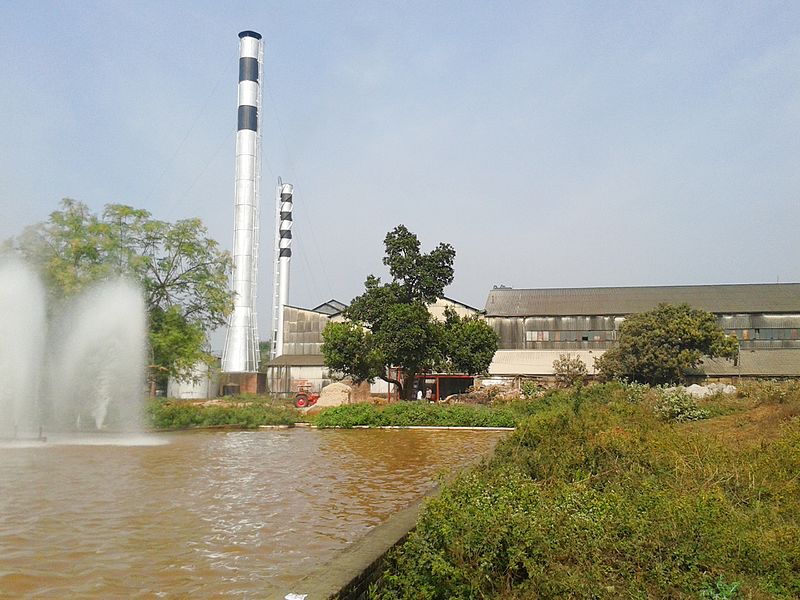
The state-owned industrial enterprise Carew & Company (Bangladesh) Limited in Darsana, Chuadanga, is caught between the weight of tradition and the pressure of financial reality.
In the ongoing 2025–26 crushing season, Carew’s core sugar unit once again failed to achieve the expected success. Although 68 working days were planned, crushing operations had to be wrapped up after just 62 days. On Friday (6 February), the season was officially declared closed. However, with production targets unmet, the specter of losses persists this year as well.
Carew Sugar Mill’s Managing Director, Rabbik Hasan, said that the target for the season was to crush 76,000 metric tons of sugarcane and produce 4,256 metric tons of sugar. That target, however, could not be achieved within the stipulated time.
It may be noted that on 5 December, Industry Adviser Adilur Rahman Khan inaugurated Carew’s 88th crushing season by throwing sugarcane into the mill at a milad mahfil and cane carrier ceremony. As in previous years, there was optimism surrounding the historic institution, but by the end of the season much of that hope had faded.
While sugar production continues to struggle, Carew’s financial backbone has been sustained by its distillery unit. In the 2024–25 fiscal year, the sugar segment incurred losses of around BDT 620 million, whereas the distillery generated profits exceeding BDT 1.90 billion. After consolidating income and expenditure across all units, net profit stood at BDT 1.29 billion—the highest in Carew’s history.
In other words, while losses continue to plague the sugar unit, the distillery—producing foreign liquor, country spirit, vinegar, organic fertilizer, and other products—has emerged as the company’s “lifeline.” Conscious observers say Carew’s current financial stability is now entirely dependent on the distillery.
Local farmers allege that they are losing interest in sugarcane cultivation due to the lack of fair prices. Compared to the price they receive for cane, market prices of sugar are several times higher. As a result, farmers feel deprived on one side, while consumers bear the burden of high prices on the other.
With declining production capacity at domestic sugar mills, imported sugar has gained dominance in the market. Stakeholders argue that an import-dependent market structure and the influence of syndicates are making it increasingly difficult for local industries to survive.
Founded in 1938, Carew & Company carries the legacy of the British era. Over time, alongside sugar production, diversified industrial output through its distillery has kept the institution afloat. However, a critical question remains: where is the long-term plan to make the sugar industry profitable? Without expanding sugarcane cultivation, introducing modern technology, and reforming market management, can Carew’s sugar unit regain its footing?
Industry insiders believe that to save Carew & Company, reliance solely on distillery profits is not enough. The core sugar unit must also be made sustainable and competitive. Otherwise, there remains a real risk that this historic sugar mill will be reduced to little more than a nominal producer.
Rowmari - Kurigram
7:21 am, Thursday, 26 March 2026


Notice:
Last Update:
Sugar Production Slumps, Distillery Profits Soar Losses Shadow Sugar at Darsana Carew, Liquor Unit Makes History
-
 Reporter Name
 - Update Time : ০৮:৪২:৫৩ am, Sunday, ৮ ফেব্রুয়ারী ২০২৬
- 11 Time View
Tag :